

Key Takeaways
- Understanding sensor compatibility is crucial for obtaining accurate temperature readings in industrial applications.
- Evaluate output signal requirements to ensure compatibility with your existing control systems.
- High measurement accuracy in temperature transmitters is essential for product quality and process reliability.
- Choosing the right Temperature Transmitter Suppliers in India ensures quality and reliability in industrial temperature measurement solutions.
- Consider environmental conditions that may affect the performance of temperature transmitters for optimal results.
Accurate temperature measurement plays a vital role in industrial operations. Industries such as manufacturing, pharmaceuticals, food processing, chemical plants, power generation, water treatment, and automation systems rely on precise temperature monitoring to maintain product quality, operational efficiency, and process stability. A temperature transmitter serves as a critical link between temperature sensors and control systems by converting sensor signals into standardized outputs that can be transmitted over long distances without significant signal loss.
Selecting the right temperature transmitter can significantly impact measurement accuracy, process reliability, and equipment performance. With various models and specifications available in the market, understanding the key factors involved in choosing a suitable transmitter becomes essential. RBA OPTISYNC PRIVATE Limited offers advanced temperature measurement solutions designed to meet the diverse requirements of modern industries.
Understanding a Temperature Transmitter
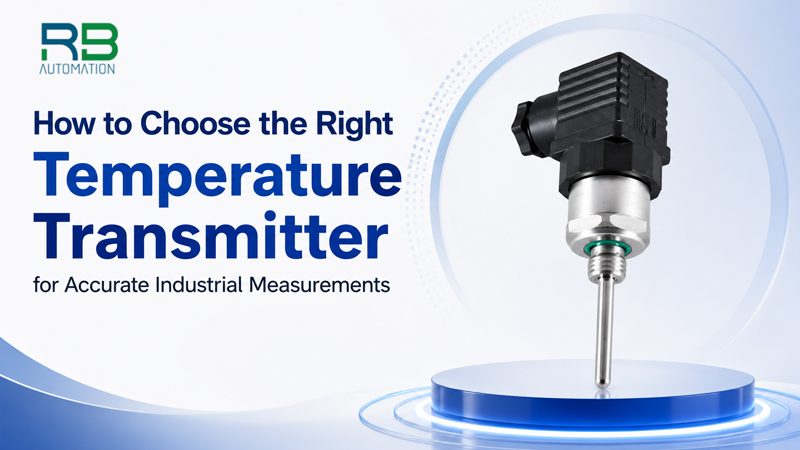
A temperature transmitter is an electronic gadget that receives signals from temperature sensors like an RTD (Resistance Temperature Detector) and changes it into a common output signal. These output signals can be used to feed back to PLCs, SCADA systems, controllers and monitoring equipment for precise process control.
The RB02 Temperature Transmitter from RBA OPTISYNC PRIVATE Limited is based on PT100 and PT1000 sensing elements, and provides industry standard outputs including 4-20mA, 0-5V, 0-10V and RS485 communication. The transmitter features linear correction circuitry which improves the measurement accuracy and ensures stability over a wide range of industrial applications.
Sensors are subject to electrical noise, vibration, humidity and temperature changes in industrial environments. These challenges can be reduced by using a quality temperature transmitter to provide accurate and stable signals for process monitoring and control.
Why Accurate Temperature Measurement Matters
One of the most important parameters in industrial operations is the temperature. Thermal variations, no matter how small, can impact product quality, process efficiency and equipment life. Accurate temperature measurements help industries:
- Improve product consistency
- Reduce production errors
- Increase operational efficiency
- Optimize energy consumption
- Support regulatory compliance
- Minimize equipment damage
- Enhance process safety
A good temperature transmitter investment can help with improved process control and long-term savings in industrial processes.
Key Factors to Consider When Choosing a Temperature Transmitter
1. Sensor Compatibility
One of the first things to consider is whether or not the temperature sensors will be compatible. There are different types of sensors used in different applications, such as PT100 and PT1000 RTD which is a resistance temperature device.
The RB02 Temperature Transmitter is compatible with both PT100 and PT1000 type sensors and hence is suitable for various industrial applications. It is important that the sensor and transmitter are compatible in order to get accurate readings and have a stable measurement.
Make sure that the transmitter you are considering has the correct type of sensors that are compatible with your process.
2. Output Signal Requirements
Industrial control systems require specific signal formats for communication and monitoring. Common output options include:
- 4-20mA
- 0-5V
- 0-10V
- RS485
The RB02 Temperature Transmitter provides several output modes, which can be easily adapted to various automation and control systems. The right output signal is the right step to better communication between field instruments and central monitoring systems.
3. Measurement Accuracy
One of the most critical parameters to consider in choosing a temperature transmitter is accuracy. High-accuracy transmitters offer reliable measurements, ensuring process uniformity and quality control.
The RB02 model is equipped with linear correction technology that enhances the overall measurement performance. Transmitters with stable readings over time are very useful for applications that must provide accurate temperature readings.
When industries require reliable solutions, they turn to seasoned Temperature Transmitter Suppliers in India to find products that meet their required accuracy standards.
4. Environmental Conditions
There are many different types of industrial environments. Dust, moisture, vibration, chemicals, and extremes in temperature may impact the performance of the transmitter. When choosing a transmitter, you should take into account:
- Ambient temperature range
- Humidity levels
- Exposure to corrosive substances
- Mechanical vibration
- Installation location
Transmitter designed for industrial use can offer longer service life and stable performance.
5. Communication Capabilities
Digital communication and automation technologies are becoming more and more crucial for modern industrial facilities.
Data transmission over long distance with RS485 communication support without loss of integrity. The RB02 Temperature Transmitter is compatible with RS485 communication, which is ideal for sophisticated monitoring systems in the industrial world.
Digital communication increases data availability and supports operators in making decisions based on data from the current process.
6. Installation and Maintenance Requirements
Avoiding downtime and operational expenses can be achieved through easy installation and maintenance.
Consider the following:
- Mounting options
- Wiring simplicity
- Calibration requirements
- Accessibility for maintenance
The ability to be easily installed and maintained helps ensure smoother plant operation and helps reduce service interruptions.
Benefits of Choosing the RB02 Temperature Transmitter
The RB02 Temperature Transmitter offers several advantages for industrial users seeking reliable temperature measurement solutions.
High Measurement Precision
The integrated linear correction circuitry helps improve measurement consistency and signal accuracy.
Multiple Output Options
Flexibility for various industrial control systems is provided by support for 4-20mA, 0-5V, 0-10V, and RS485 outputs.
PT100 and PT1000 Compatibility
The transmitter accommodates commonly used RTD sensors, making it suitable for diverse applications.
Reliable Signal Transmission
Signal conversion and amplification help reduce transmission errors and support stable monitoring.
Industrial Application Flexibility
The RB02 model can be deployed across multiple industries requiring accurate temperature measurement and process control.
Many businesses seeking trusted Temperature Transmitter Suppliers in India look for products that combine flexibility, accuracy, and long-term reliability.
How Temperature Transmitters Improve Industrial Automation
Industrial automation depends on accurate field data for efficient operation. Temperature transmitters convert sensor signals into usable information that can be processed by automation systems.
Benefits include:
- Better process control
- Improved operational visibility
- Faster decision-making
- Reduced manual intervention
- Enhanced production efficiency
- Improved equipment monitoring
The RB02 Temperature Transmitter supports modern automation requirements through standardized outputs and reliable signal transmission.
Why Quality Matters in Temperature Measurement Equipment
The temperature itself is directly affecting the processes. Signal instability, inaccurate readings and maintenance issues can arise from poor quality transmitters. These are the benefits that can be gained from the use of quality transmitters in industries:
- Consistent process performance
- Reliable data acquisition
- Improved equipment protection
- Better operational planning
- Reduced downtime
Reputable Temperature Transmitter Suppliers in India are preferred by organizations, as they offer proven products and technical expertise, along with industry experience.
Why Choose Us
RBA OPTISYNC PRIVATE Limited is committed to delivering dependable industrial automation and temperature measurement solutions designed for modern industries. Our RB02 Temperature Transmitter is developed with a focus on measurement accuracy, operational reliability, and application flexibility. We understand the challenges faced by industrial facilities and provide products that support efficient process monitoring and control. With extensive industry knowledge, quality-driven manufacturing practices, and customer-focused support, RBA OPTISYNC PRIVATE Limited continues to be a trusted choice for businesses seeking advanced temperature measurement technologies. Companies looking for reliable Temperature Transmitter Suppliers in India can rely on our expertise, product quality, and commitment to long-term customer satisfaction.
Conclusion
Choosing the right temperature transmitter is essential for achieving accurate industrial measurements and maintaining efficient process control. Factors such as sensor compatibility, output options, accuracy, environmental conditions, communication capabilities, and maintenance requirements should all be carefully evaluated before making a selection. The RB02 Temperature Transmitter from RBA OPTISYNC PRIVATE Limited offers reliable performance, flexible output configurations, and compatibility with PT100 and PT1000 sensors, making it suitable for various industrial applications. Businesses seeking dependable Temperature Transmitter Suppliers in India can benefit from selecting high-quality solutions that support long-term operational success and measurement accuracy.
Looking for the right temperature transmitter for accurate industrial measurements? Contact RBA OPTISYNC PRIVATE Limited today. Call us at +91 8511104864 or email contact@rbautomate.com
Frequently Asked Questions
What factors should I consider when selecting temperature transmitter suppliers in India?
When selecting temperature transmitter suppliers in India, consider factors such as sensor compatibility, output signal requirements, measurement accuracy, environmental conditions, communication capabilities, and installation or maintenance requirements. Each of these elements can significantly influence the performance and reliability of your temperature measurement solutions.
How does a temperature transmitter improve industrial automation?
A temperature transmitter enhances industrial automation by converting sensor signals into standardized outputs that can be processed by automation systems. This allows for better process control, improved operational visibility, and enables faster decision-making, all of which contribute to increased efficiency in production.
Why is measurement accuracy important in temperature transmitters?
Measurement accuracy is critical in temperature transmitters because inaccurate readings can lead to product quality issues, increased operational costs, and equipment damage. High-accuracy transmitters ensure reliable temperature monitoring, which is essential for maintaining process consistency and optimizing resource use.
What output signal options should I look for in a temperature transmitter?
When choosing a temperature transmitter, look for diverse output signal options such as 4-20mA, 0-5V, 0-10V, and RS485 communication. Selecting multiple output formats allows for greater versatility and better integration with different industrial automation and monitoring systems.
How can I ensure my temperature transmitter is suitable for harsh industrial environments?
To ensure your temperature transmitter is suitable for harsh industrial environments, consider its ambient temperature range, humidity resistance, and ability to withstand mechanical vibrations and exposure to corrosive substances. Selecting a transmitter designed specifically for industrial use will help guarantee longevity and stable performance in challenging conditions.
