

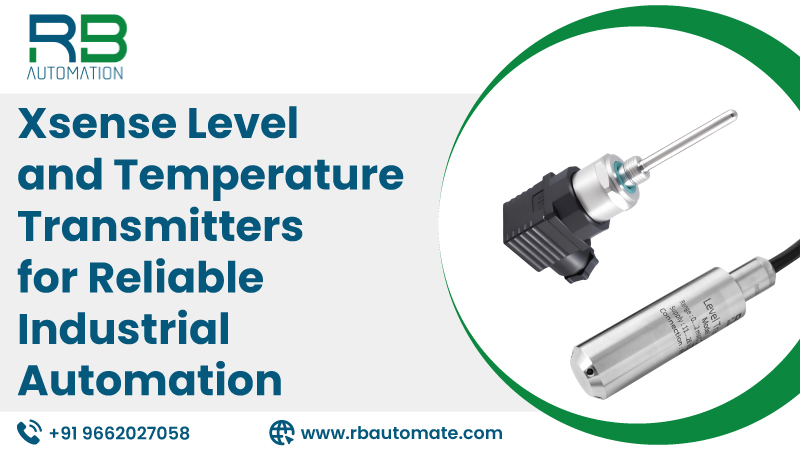
Industrial automation works best when data stays accurate and stable. Every reading affects safety, output, and cost. One wrong signal can slow production or stop it completely. That is why industries rely on transmitters that deliver steady performance in real conditions. Xsense solutions from RBA OPTISYNC PRIVATE LIMITED support this need with strong design and dependable measurement.
Understanding the role of temperature and level measurement in automation
Automation systems depend on measurement first. Control comes later. When temperature or liquid level data shifts even slightly, the process reacts. In food processing, chemicals, power plants, or water systems, that reaction decides quality and safety. A temperature transmitter converts sensor signals into stable outputs that control systems can read. A level transmitter tracks liquid height or pressure to prevent overflow, dry running, or imbalance. Industries now demand compact devices, fast response, and long service life. Manual monitoring no longer works at scale. Digital control needs transmitters that stay reliable under vibration, pressure, moisture, and temperature changes. This is where Xsense products gain importance.
Xsense temperature transmitters and their industrial value
Xsense temperature transmitters support consistent temperature tracking across demanding applications. They connect with RTDs or thermocouples and convert raw signals into standardised outputs used by PLCs and DCS systems. A temperature transmitter improves signal stability and reduces noise, especially across long cable runs. Industries prefer smart designs because they support calibration, diagnostics, and accuracy over time. When sourced from a trusted temperature transmitter supplier, these devices help reduce downtime and improve control confidence. RBA OPTISYNC PRIVATE LIMITED focuses on solutions that match real operating conditions rather than lab-only performance.
In manufacturing plants, a temperature transmitter helps regulate furnaces, ovens, and heat exchangers. In utilities, it supports boilers and energy systems. In chemical processing, it supports reaction control where small variations matter.
Smart temperature measurement for modern systems
Modern plants expect more than raw data. Smart transmitters offer stable output, fast response, and compatibility with automation platforms. A temperature transmitter supplier must understand these needs and support integration without added complexity.
Xsense smart models focus on accuracy, repeatability, and signal integrity. They support long-term operation without frequent recalibration. This reduces maintenance effort and lowers lifecycle cost. RBA OPTISYNC PRIVATE LIMITED works closely with industrial clients to align transmitter selection with system design and environmental limits.
A reliable temperature transmitter enhances product quality, minimises waste, and promotes energy efficiency. That impact becomes visible across daily operations.
Hydrostatic level transmitters and fluid measurement
Liquid level control remains critical across industries. Hydrostatic methods measure pressure at the base of a tank or column and convert it into level data. Hydrostatic level transmitters suit applications with varying tank shapes, depths, and fluid types.
These Hydrostatic level transmitters are designed to withstand harsh environments, such as wastewater plants, chemical tanks, and industrial reservoirs. Hydrostatic level transmitters provide continuous data without moving parts, which improves durability. They also perform well where ultrasonic or radar methods struggle.
Xsense hydrostatic solutions focus on stability under pressure and temperature changes. RBA OPTISYNC PRIVATE LIMITED supplies models designed for long immersion life and reliable sealing.
Level transmitters in industrial automation
A level transmitter supports control decisions every second. It helps prevent spills, protects pumps, and supports inventory tracking. In automation systems, the level transmitter sends signals that trigger alarms, valves, or shutdowns. Industries choose hydrostatic level transmitters when they need accuracy in compact spaces. These devices suit clean water, industrial fluids, and many process liquids. Selection depends on pressure range, temperature limits, and chemical compatibility.
A trusted temperature transmitter supplier often supports level solutions as well, offering system-level understanding. RBA OPTISYNC PRIVATE LIMITED provides both measurement types to simplify sourcing and integration.
Applications across industries
Xsense transmitters support a wide range of industries. In water and wastewater treatment, hydrostatic level transmitters track tank levels and pumping cycles. In power generation, a temperature transmitter supports boiler control and turbine safety. In manufacturing, a level transmitter helps manage raw material and chemical dosing. Food and beverage plants rely on stable measurement for hygiene and consistency. Oil and gas operations demand rugged devices that withstand pressure and temperature extremes. Across all these sectors, data reliability defines system success.
Choosing the right transmitter supplier
Choosing the right temperature transmitter supplier matters as much as choosing the device. Product quality, technical support, and application knowledge all play a role. RBA OPTISYNC PRIVATE LIMITED focuses on matching product capability with real operating demands. A strong supplier helps during selection, installation, and long-term use. They understand how hydrostatic level transmitters behave in various fluids and how temperature transmitters respond to environmental stress. This guidance reduces errors and improves system confidence.
Why accurate measurement improves efficiency
Accurate measurement supports better control. Better control reduces waste. A stable level transmitter prevents overflow and material loss. A reliable temperature transmitter avoids overheating and product damage. Over time, these improvements reduce energy use and maintenance cost. Automation depends on trust in data. When sensors and transmitters perform consistently, operators focus on optimization rather than troubleshooting. RBA OPTISYNC PRIVATE LIMITED supports this shift by supplying transmitters designed for industrial reality.
Why choose us
Choosing RBA OPTISYNC PRIVATE LIMITED means working with a team that understands industrial measurement from the ground up. We focus on practical solutions, not generic claims. Our experience with temperature transmitter systems and hydrostatic level transmitters helps clients select products that match process needs. We support integration, accuracy, and long-term reliability. As a dedicated temperature transmitter supplier, we value clarity, consistency, and technical alignment. That approach builds trust and long-term partnerships across industries.
Conclusion
Industrial automation depends on reliable measurement. Xsense level and temperature transmitters support this foundation with stable performance and practical design. A well-chosen temperature transmitter improves control and protects equipment. Accurate hydrostatic level transmitters support safety and efficiency across fluid processes. With the right level transmitter, automation systems respond faster and operate smarter. RBA OPTISYNC PRIVATE LIMITED brings these elements together through focused products and technical understanding. When data stays reliable, operations move forward with confidence.
Key takeaways
- Accurate measurement supports stable automation and safer operations.
- A reliable temperature transmitter improves process control and product quality.
- Hydrostatic level transmitters suit demanding liquid measurement environments.
- Choosing the right temperature transmitter supplier reduces long-term risk.
- Integrated solutions simplify automation design and maintenance.
Want to learn more about Xsense level and temperature transmitters for industrial automation. Call us at +91 9662027058 or email inquiry@rbautomate.com for expert guidance and details.
FAQs
What is the role of a temperature transmitter in automation?
It converts sensor signals into stable outputs used by control systems for accurate temperature control.
Where are hydrostatic level transmitters commonly used?
They are used in tanks, wells, and reservoirs where direct liquid level measurement is required.
How does a level transmitter improve safety?
It helps prevent overflow, dry running, and process imbalance through continuous monitoring.
Why choose a dedicated temperature transmitter supplier?
Specialized suppliers offer better product matching, support, and application knowledge.
Can one supplier support both level and temperature measurement?
Yes, RBA OPTISYNC PRIVATE LIMITED provides integrated solutions for both measurement needs.
