


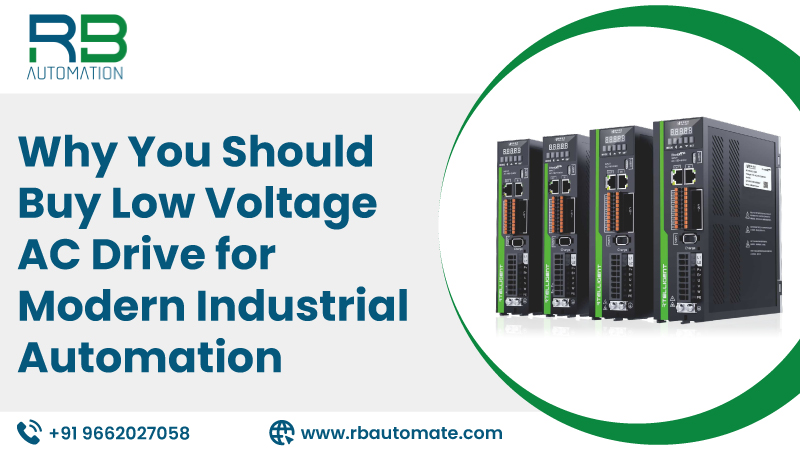
Industrial automation today runs on speed, control, and reliability. Every motor movement affects output quality, energy use, and machine life. This is why industries across India are shifting toward smarter motor control solutions. At the centre of this shift is the ac drive, especially the low voltage ac drive. It gives operators better control, smoother operation, and real savings over time. If your plant depends on motors for conveyors, pumps, compressors, mixers, or fans, understanding the value of low voltage drives can change how your automation performs every day.
Modern factories do not work on fixed speeds anymore. Load conditions change. Production targets shift. Energy costs rise. A standard motor running at full speed all the time wastes power and stresses equipment. A low voltage ac drive solves this problem by adjusting motor speed based on real demand. This simple change delivers better efficiency, longer equipment life, and higher process stability.
Understanding What an AC Drive Does in Automation
An ac drive controls the speed and torque of an electric motor by adjusting voltage and frequency. Instead of switching motors on and off, the drive allows smooth acceleration and deceleration. This reduces mechanical shock and improves control. In automation systems, the low voltage ac drive is widely used because it suits most industrial motors and applications. It supports precise speed control while operating within safe voltage ranges. Industries prefer this solution for its balance of performance, safety, and cost.
Why Low Voltage AC Drives Fit Modern Industrial Needs
Industrial automation today focuses on flexibility. Machines must adapt to different products and batch sizes. A low voltage ac drive supports this flexibility by allowing quick speed changes without stopping production. Compared to fixed-speed systems, low voltage ac machine drives reduce wear on belts, gears, and bearings. Motors start smoothly, not abruptly. This reduces breakdowns and maintenance frequency. Over time, this reliability improves plant uptime and output consistency.
Energy Efficiency and Cost Savings
Energy consumption remains a major concern for industries. Motors consume a large share of industrial power. Running them at full speed when not required wastes energy. A low voltage ac drive matches motor speed to load demand, which cuts unnecessary power use.
For applications like pumps and fans, even small speed reductions bring large energy savings. This is why many plants now work with a low voltage AC drive supplier to upgrade existing systems. The investment pays back through reduced electricity bills and lower maintenance costs.
Improved Process Control and Product Quality
Consistent speed control leads to consistent output. In conveyors, smooth speed control avoids product spillage. In mixers, it supports uniform blending. In packaging lines, it improves timing accuracy. By using an ac drive, operators gain better control over production variables. This level of control helps maintain quality standards across shifts. Reliable low voltage ac machine drives support automation that responds smoothly instead of reacting late.
Safety and Equipment Protection
Motor protection is another key benefit. A low voltage ac drive monitors current, voltage, and temperature. It protects motors from overload, overheating, and phase issues. This protection reduces the risk of sudden motor failure. When sourced from a trusted supplier of low voltage AC drive, these systems also include fault diagnostics. Operators can identify issues early and take action before serious damage occurs.
Applications Across Industrial Sectors
Low voltage drives support a wide range of industries. Manufacturing plants use ac drive systems for conveyors and assembly lines. Water treatment plants rely on low voltage ac drive solutions for pumps and blowers. HVAC systems depend on them for fans and compressors. In all these applications, low voltage ac machine drives improve control and efficiency. Industries that work with experienced low voltage ac machine drive supplier partners benefit from correct sizing and application support.
Importance of Choosing the Right Supplier
Not all drives perform the same way. Selection depends on motor rating, load type, environment, and control requirements. A knowledgeable low voltage AC drive supplier helps avoid mismatched systems that cause inefficiency or frequent faults. In regions like Gujarat, industries prefer local expertise. Low voltage ac drive suppliers in gujarat offer faster support and better understanding of regional industrial needs. Across the country, reliable low voltage ac drive suppliers in India support projects from planning to commissioning.
Integration with Automation and Control Systems
A low voltage ac drive integrates easily with PLCs, HMIs, and SCADA systems. This allows centralized control and monitoring. Operators can adjust speed, track performance, and respond to alarms from one interface. Proper integration improves transparency and control. When supported by an experienced supplier of low voltage AC drive, commissioning becomes smoother and faster.
Long-Term Reliability and Scalability
Automation investments should support growth. A well-selected ac drive allows future expansion without major redesign. Speed ranges, communication options, and control logic can adapt as production grows. By working with trusted low voltage ac drive suppliers in India, industries gain solutions that scale with business needs. This future-ready approach protects investment value.
Why Choose Us
RBA OPTISYNC PRIVATE LIMITED focuses on delivering practical and reliable automation solutions for Indian industries. The company understands real plant conditions and offers strong support in selecting the right low voltage ac drive for each application. As an experienced low voltage AC drive supplier, RBA OPTISYNC PRIVATE LIMITED works closely with customers to improve efficiency, control, and reliability. From selection to support, the team focuses on long-term performance rather than short-term fixes. This approach makes RBA OPTISYNC PRIVATE LIMITED a trusted partner for modern industrial automation projects.
Conclusion
Modern industrial automation demands control, efficiency, and reliability. A low voltage ac drive meets these demands by delivering smooth motor control, energy savings, and equipment protection. From improving product quality to reducing operating costs, the benefits are clear. When you work with the right supplier of low voltage AC drive, implementation becomes easier and results last longer. With expert support from RBA OPTISYNC PRIVATE LIMITED, industries gain solutions that support growth, stability, and smarter automation decisions.
Key Takeaways
- Low voltage AC drives improve energy efficiency and motor life.
- Better speed control supports consistent product quality.
- Proper supplier support improves system reliability.
- Local suppliers reduce downtime and service delays.
- Modern automation depends on flexible motor control.
Looking to upgrade your automation with low voltage AC drives? Contact RBA OPTISYNC PRIVATE LIMITED today. Call +91 9662027058 or email inquiry@rbautomate.com for expert guidance.
FAQs
What is a low voltage AC drive used for?
It controls motor speed and torque to improve efficiency and process control in industrial applications.
Which industries benefit most from AC drives?
Manufacturing, water treatment, HVAC, packaging, and process industries benefit greatly.
How does a low voltage AC drive save energy?
It adjusts motor speed based on load demand instead of running at full speed constantly.
Why is supplier selection important for AC drives?
Correct sizing, integration, and support improve performance and reduce downtime.
Why choose RBA OPTISYNC PRIVATE LIMITED?
The company offers practical automation expertise, reliable products, and strong after-sales support.
