


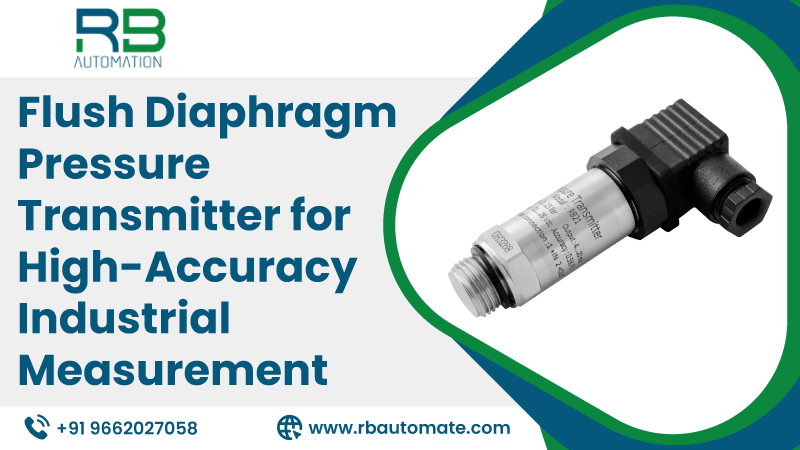
Accurate pressure measurement is fundamental to product quality, safety, and process efficiency across many industries. When the process requires sanitary surfaces, viscous media, or frequent cleaning, a Flush Diaphragm pressure transmitter becomes the preferred choice.
What is a Flush Diaphragm Pressure Transmitter?
A Flush Diaphragm pressure transmitter is a type of pressure transmitter where the sensing element is covered by a diaphragm that lies flush with the process connection. The diaphragm isolates the sensor from sticky, viscous, corrosive, or hygienic media while transmitting pressure through a thin film of compatible fill fluid or direct mechanical coupling.
This arrangement removes dead zones and prevents clogging, which makes flush diaphragms ideal for food, pharmaceutical, chemical, and hygienic process lines. Product families such as the RB Xsense RB21F series offer flush diaphragm variants with 4–20 mA output and accuracy options commonly around 0.5% FS.
Why industries choose a Flush Diaphragm design
Processes with sticky media, slurries, or regular CIP/SIP cleaning demand transmitters that leave no crevices for material to collect. A Flush Diaphragm pressure transducer or Flush Diaphragm pressure transmitter provides a smooth process surface that supports hygienic operation and simple maintenance.
In addition, when sanitary process connections (triclover, clamp, or G-thread flush ports) are required, the flush diaphragm design removes the risk of contamination and reduces downtime for cleaning. Real-world suppliers position these products for food, beverage, and pharmaceutical plants as well as chemical dosing and viscous fluid measurement tasks.
Core features and technical advantages
A modern pressure transmitter with a flush diaphragm presents several performance advantages:
- Direct, reliable pressure transfer from process to sensor with minimal dead volume.
- Compatibility with hygienic fittings and ease of cleaning.
- Accurate outputs (commonly 4–20 mA) and optional digital protocols for diagnostics.
- Wide measurement ranges — from millibar to hundreds of bar — to suit diverse applications.
- Materials such as SS316L diaphragms for corrosion resistance in aggressive or sanitary media.
Products like the RB Xsense RB21F list pressure spans from low mbar ranges up to high bar ranges with configurable process connections and M12 or threaded electrical connectors, which gives operators options tailored to their plant control architectures.
Typical industrial applications
A carefully selected Flush Diaphragm pressure transmitter becomes a critical sensor in many process steps:
- Food and beverage industry: used for accurate pressure readings in filling systems, mixing units, and process pipelines that undergo frequent CIP/SIP cleaning.
- Pharmaceutical: sterile processes and batch validation where sanitary surfaces and traceability matter.
- Chemical processing: measurement in thick slurries, polymer melts, and corrosive liquids.
- Water and wastewater: sludge measurement and pump control where clogging is a risk.
- Cosmetics and personal care: viscous creams and lotions where sensor fouling reduces reliability.
Across these applications, the combination of a hygienic surface and robust sensor electronics turns pressure data into dependable control inputs for PLCs and SCADA systems.
Selecting the right model — practical guidance
Choosing the correct pressure transmitter for your application reduces rework and operational headaches. Follow a straightforward, practical sequence:
- Identify the pressure range and span you need (e.g., 0–1 bar, 0–10 bar, up to 400 bar).
- Select the process connection type: flush G-thread, triclover, clamp, or custom sanitary fittings.
- Choose materials that contact the process (SS316L diaphragms are common for hygienic needs).
- Decide the electrical output: pressure transmitter analog 4–20 mA for simple loops, or digital options for diagnostic data.
- Verify temperature compatibility and overpressure limits to match your process conditions.
Manufacturers such as RB Xsense provide model variants that cover low mbar ranges up to high-pressure spans, with accuracy classes typically around 0.5% FS for industrial use. These product choices make it possible to match instrument capability to the exact process requirement rather than compromise.
Installation and mounting best practices
Proper installation preserves the accuracy of any pressure transmitter. For a Flush Diaphragm pressure transmitter, follow these steps:
- Install the transmitter so the diaphragm is not mechanically stressed by misalignment.
- Use the recommended torque on threaded connections to avoid deformation of the diaphragm.
- Keep electrical wiring separated from power cables to limit electrical noise on the 4–20 mA loop.
- Where possible, locate the transmitter at an accessible point for inspection and periodic calibration.
These practical actions minimize drift and reduce maintenance time over the instrument’s lifecycle.
Why material choice matters for flush diaphragms
The diaphragm is the only barrier between the process and the sensing element. Choose materials with the right chemical compatibility and mechanical strength. SS316L is a common choice for sanitary and chemical applications because of its corrosion resistance and FDA/USP-friendly surface properties. Elastomers and seals must match the process chemistry and temperature range to avoid premature failure. When a Flush Diaphragm pressure transmitter is properly specified, it resists corrosion and maintains measurement accuracy for longer service intervals.
Digital integration and smart features
A modern pressure transmitter may provide more than a simple current loop. Smart models deliver device configuration, zero/span adjustments, and self-diagnostics over protocols like HART or Modbus. These digital capabilities let maintenance teams verify device status remotely and reduce troubleshooting time. When a supplier offers smart transmitters as part of their lineup, it helps integrate field instruments into predictive maintenance programs and plant asset management systems.
Practical deployment roadmap
For a successful rollout of Flush Diaphragm pressure transducer units across a plant, follow this phased approach:
- Pilot: Install the transmitter on one critical loop and validate performance against lab or portable calibrators.
- Scale: Apply lessons learned to similar process zones and standardize mounting, wiring, and calibration procedures.
- Maintain: Use device diagnostics for condition-based calibration and keep spare diaphragm modules on site.
This pathway reduces risk and shortens the time to measurable operational benefit.
Common mistakes and how to avoid them
Operators sometimes select a generic pressure transmitter without checking the process surface or cleaning regimen. That choice leads to clogging, inaccurate readings, and excessive maintenance. Another frequent issue is choosing a transmitter with the wrong pressure span or inadequate temperature rating. Avoid these mistakes by validating application details with a supplier who understands hygienic and heavy industrial environments. Flush Diaphragm pressure transmitter suppliers in india who offer application engineering help reduce the chance of mismatches.
Realistic performance expectations
Expect a well-specified Flush Diaphragm pressure transmitter to deliver reliable readings with repeatability suitable for control loops and process monitoring. Accuracy classes around 0.5% FS are typical for many industrial flush diaphragm models, while specialized high-accuracy units may offer tighter tolerances. Lifecycle performance depends on maintenance, process aggressiveness, and calibration discipline. Where uptime matters, buy from a Flush Diaphragm pressure transmitter supplier that provides local spares and service.
Maintenance checklist for plant teams
Keep a short maintenance checklist for the pressure transducers and transmitters in service:
- Visual inspection of process fittings and diaphragms after cleaning cycles.
- Periodic functional test with a portable calibrator.
- Record diagnostics from any smart pressure transmitter and log drift trends.
- Replace seals and diaphragms as indicated by process wear or manufacturer guidance.
This simple discipline keeps transmitters accurately reporting process pressure and reduces unexpected shutdowns.
Why Choose Us
RBA OPTISYNC PRIVATE LIMITED is deeply familiar with process instrumentation and delivers application-focused guidance, local stock availability, and technical support targeted to industrial and hygienic environments. Our team helps customers select the right pressure transmitter, whether a general-purpose pressure transducer or a sanitary Flush Diaphragm pressure transmitter. We support installation, calibration, and lifecycle care so your measurement investment produces reliable control and documented performance over time. Choosing RBA OPTISYNC PRIVATE LIMITED means getting responsive service, proven product lines like RB Xsense, and technical advice that aligns instruments to the realities of production.
Conclusion
A Flush Diaphragm pressure transmitter delivers hygienic, clog-free measurement where ordinary sensors fail. For processes handling viscous, sticky, or sterile fluids, the flush diaphragm’s smooth surface and process compatibility preserve product quality and simplify cleaning. Choosing the correct pressure span, material, and output format makes the instrument useful for control and data logging. Working with an experienced supplier who stocks compatible models and provides calibration support shortens project timelines and reduces operational risk. For plants in Gujarat and across India, selecting a reliable pressure transmitter partner completes the chain from specification through installation to dependable long-term measurement.
key takeaways
- Flush Diaphragm pressure transmitters provide clog-free, hygienic measurement, making them ideal for viscous, sticky, corrosive, and sanitary applications across food, pharma, chemical, and wastewater industries.
- Their flush-mounted diaphragm eliminates dead zones, supports fast cleaning (CIP/SIP), and maintains reliable pressure transfer, improving product quality and reducing downtime in demanding process environments.
- Choosing the right model depends on pressure range, process connection, diaphragm material (like SS316L), electrical output, and temperature limits so the transmitter fits operational and hygienic requirements.
- Smart features such as HART/Modbus diagnostics, zero/span adjustments, and remote configuration strengthen maintenance efficiency, predictive monitoring, and long-term accuracy.
- Partnering with experienced suppliers like RBA OPTISYNC PRIVATE LIMITED helps avoid mismatches, supports proper installation, offers calibration guidance, and gives access to local spares for long-lasting and reliable pressure measurement.
For expert help selecting the best Flush Diaphragm pressure transmitter for your application, call +91 96620 27058 or email inquiry@rbautomate.com — we assist with selection, supply, and on-site support.