
Pressure is invisible. Yet in hygienic industries, it decides product quality, safety, and compliance. One tiny error, one contaminated sensor, and the entire batch can fail. That’s why hygienic pressure measurement exists. Not as a luxury. As a necessity. A hygienic pressure transmitter works quietly inside food lines, pharma reactors, dairy pipelines, and biotech systems, measuring pressure without touching contamination risks. This guide walks you through how a hygienic pressure transmitter works, what makes it different, where it’s used, and why choosing the right partner like RBA OPTISYNC PRIVATE LIMITED changes outcomes.
What Is a Hygienic Pressure Transmitter
A pressure transmitter converts applied pressure into an electrical signal that control systems can read and act on. Simple. Reliable. A hygienic pressure transmitter does the same job, but with much stricter rules. Smooth surfaces. No crevices. No dead zones. Materials safe for food and pharmaceutical contact. Every detail counts. This matters when your process demands cleanliness at every step. There’s no room for shortcuts. No tolerance for contamination. In hygienic applications, pressure measurement must stay accurate while fully meeting sanitation standards. That balance—performance plus purity—is what truly defines the product.
Why Hygienic Design Matters in Pressure Measurement
In industries like food, beverage, dairy, pharmaceutical, and biotech, contamination is the enemy. Traditional sensors can trap residue. That leads to bacterial growth. Cleaning becomes difficult. Hygienic pressure transmitters solve this by using flush diaphragms and sanitary connections. The result is safe pressure monitoring without compromising cleanliness. This is why demand for Hygienic Pressure Transmitter in India keeps growing as regulatory standards tighten.
Working Principle of a Hygienic Pressure Transmitter
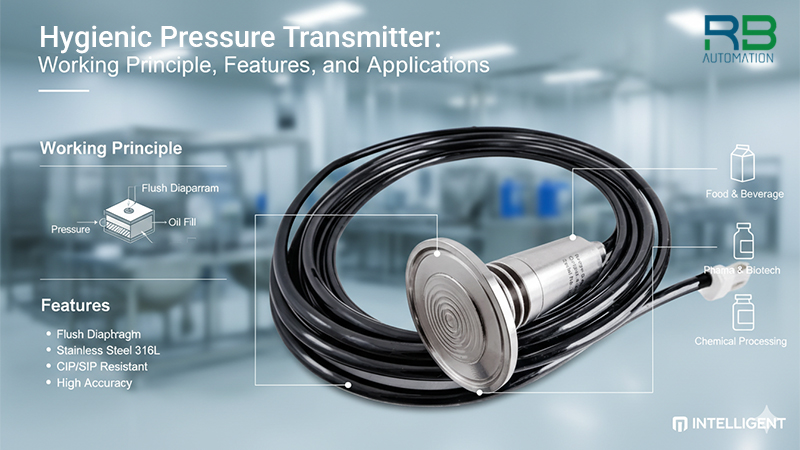
The working principle stays simple, even if the design is specialized. Pressure acts on a diaphragm. That mechanical force converts into an electrical signal through strain gauge or piezoresistive technology. The transmitter conditions the signal and outputs a stable, standardized value like 4–20 mA. Control systems read it instantly. Valves adjust. Pumps respond. Processes stay controlled. That’s the loop. Clean. Reliable. Continuous.
Role of Transmitter and Sensor Integration
In hygienic systems, the relationship between transmitter and sensor matters deeply. The sensor detects pressure. The transmitter converts it into a usable signal. Together, they form a reliable measurement chain. A mismatch leads to inaccurate readings. That’s why integrated pressure transmitter and sensor solutions dominate hygienic industries. Compatibility is not optional here.
Key Features of Hygienic Pressure Transmitters
Hygienic pressure transmitters include features designed for demanding environments:
- Flush diaphragm design to prevent residue buildup.
- Stainless steel construction suitable for CIP and SIP cleaning.
- High accuracy across wide temperature ranges.
- Stable output for automation systems.
- Compliance with hygienic standards used in regulated industries.
These features define a true hygienic pressure transmitter, not just a renamed industrial device.
Understanding Hygienic Pressure Sensors
A hygienic pressure sensor directly contacts the process media while maintaining sanitary integrity. It resists corrosion. It handles cleaning chemicals. It tolerates high-pressure washdowns. Paired with the right transmitter, it delivers consistent data. Industries choose hygienic sensors because reliability matters more than shortcuts.
Applications Across Hygienic Industries
Hygienic pressure transmitters support many critical processes. Food processing lines rely on them for consistent flow and filling. Dairy plants use them in pasteurization systems. Pharmaceutical manufacturing uses them in reactors and filtration units. Breweries monitor fermentation pressure. Biotech facilities depend on sterile pressure control. In all these cases, hygienic pressure transmitter and sensor combinations protect both product and process.
Benefits of Using Hygienic Pressure Transmitters
The advantages go beyond compliance:
- Reduced contamination risk.
- Easier cleaning and maintenance.
- Stable long-term measurement.
- Better process consistency.
- Improved audit readiness.
These benefits explain why industries actively search for Hygienic Pressure Transmitter in India that meet both technical and hygienic expectations.
Difference Between Standard and Hygienic Pressure Transmitters
Standard pressure transmitters focus on performance. Hygienic versions focus on performance plus cleanliness. Flush mounting, sanitary fittings, and smooth finishes make the difference. Using standard transmitters in hygienic processes increases risk. That risk is avoidable.
Selection Criteria for Hygienic Pressure Transmitters
Choosing the right transmitter means evaluating pressure range, process temperature, cleaning methods, connection type, and signal output. Compatibility with your pressure transmitter and sensor setup matters. So does long-term stability. This is where experienced suppliers guide decisions instead of selling generic products.
Installation and Maintenance Considerations
Correct installation protects accuracy. Flush mounting avoids dead spaces. Proper torque protects diaphragms. Regular inspection maintains performance. Hygienic pressure transmitters simplify maintenance because cleaning is part of normal operation, not an extra task.
Automation Systems and Hygienic Pressure Measurement
Modern automation depends on accurate pressure data. PLCs and DCS systems rely on transmitter outputs to regulate pumps, valves, and alarms. Hygienic pressure transmitters feed this data without compromising safety. That combination drives efficiency and compliance together.
Indian Market Demand and Industry Growth
India’s food processing and pharmaceutical sectors are expanding rapidly. With growth comes regulation. Clean measurement solutions are no longer optional. This drives consistent demand for Hygienic Pressure Transmitter in India that meet global hygiene expectations while supporting local operations.
RBA OPTISYNC PRIVATE LIMITED and Hygienic Pressure Solutions
RBA OPTISYNC PRIVATE LIMITED delivers application-focused hygienic pressure measurement solutions designed for real industrial conditions. The company understands how pressure behaves inside hygienic processes and supports customers with reliable pressure transmitter options that fit regulatory and operational needs. RBA OPTISYNC PRIVATE LIMITED works closely with system integrators and plant teams to support accurate measurement without compromising cleanliness. This practical approach defines long-term value.
Why Choose Us
RBA OPTISYNC PRIVATE LIMITED focuses on hygienic pressure measurement that supports your process goals, not just product specifications. With a clear understanding of sanitary requirements, automation needs, and industrial challenges, the company delivers solutions that integrate smoothly into your systems. Technical support, product reliability, and application knowledge come together to support consistent pressure measurement in demanding hygienic environments.
Conclusion
Hygienic pressure transmitters quietly do a lot of heavy lifting in industries where there’s no margin for error. Food and beverage lines. Pharma plants. Biotech setups. Places where cleanliness, accuracy, and reliability all collide at once. These devices don’t just measure pressure. They protect product quality. They help automation stay steady. And they do it without introducing contamination risks, which is kind of the whole point.
Knowing how they work, what features actually matter, and where they fit best makes selection easier. Less confusion. Fewer wrong calls. When the right sensor is paired correctly and installed the right way, a hygienic pressure transmitter delivers consistent, long-term performance. With minimal risk. That’s the goal. Working with experienced partners like RBA OPTISYNC PRIVATE LIMITED adds another layer of confidence. You get technical clarity. Real-world insight. And dependable support that doesn’t disappear after installation. In pressure measurement, that kind of reliability matters every single day.
Looking for reliable hygienic pressure transmitters for regulated industries? Call +918511104864 or email contact@rbautomate.com to discuss application-specific solutions and technical support.
Key Takeaways
- A hygienic pressure transmitter supports clean and accurate pressure measurement.
- Flush diaphragm design reduces contamination risks.
- Integrated pressure transmitter and sensor systems improve reliability.
- Hygienic industries demand specialized pressure measurement solutions.
- RBA OPTISYNC PRIVATE LIMITED delivers application-focused hygienic solutions.
FAQs
What is a hygienic pressure transmitter?
It measures pressure while following strict sanitary design rules. Smooth surfaces. Cleanable construction. Safe for food, pharma, and biotech processes where hygiene isn’t optional.
Where are hygienic pressure transmitters used?
You’ll find them in food processing lines, dairy plants, pharmaceutical units, breweries, and biotech facilities. Anywhere cleanliness and accuracy must work together.
How does a hygienic pressure transmitter work?
Pressure pushes against a diaphragm. That mechanical force gets converted into an electrical signal. Control systems read it. Automation responds. Simple process, reliable outcome.
Why is flush mounting important?
Because buildup is the enemy. Flush mounting eliminates gaps where residue can collect, making cleaning faster and more effective. Less risk. Better hygiene.
Why choose RBA OPTISYNC PRIVATE LIMITED?
Because the focus stays on reliable hygienic pressure solutions backed by strong technical support. Practical guidance. Long-term performance. No guesswork.