


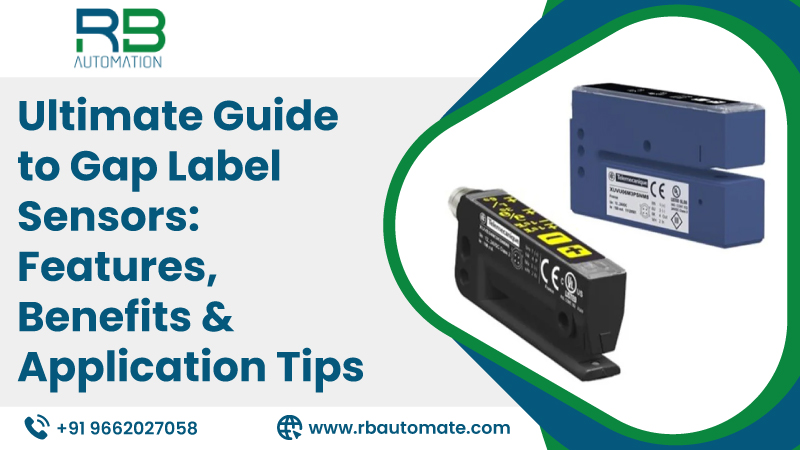
In modern packaging and Labeling lines, precise label placement is non-negotiable. A reliable label gap sensor is the heart of any accurate Labeling system — it detects the small space between labels on a continuous liner and tells the applicator exactly when to stop, print, or apply.
What is a Gap Label Sensor and why it matters?
A label gap sensor detects the difference between the face of a label and the empty space (gap) that follows it on a label roll. When the sensor sees that gap, it triggers the Labeling machine to perform an action — advance, stop, or print. This tiny, precise action is what keeps labels cantered and aligned on bottles, cartons, pouches, and more. Choosing the right gap sensor for label applications reduces waste, prevents misprints, and keeps production moving at speed.
Where gap label sensors are used (real-world applications)
Manufacturing and packaging lines across food & beverage, pharmaceuticals, cosmetics, chemicals, and consumer goods rely on label gap sensor suppliers to keep Labeling accurate. Typical use-cases include pressure-sensitive labels on bottles, warning labels on tubes, barcode labels on cartons, and serialized tags on medical packs. When a line moves at high speed, even a millimetre of misplacement is visible — that’s why the label detection sensor suppliers you choose matter as much as the product.
Picking the right sensor: practical selection guide
Start with the label material, then match the technology:
- Opaque paper or film labels: Optical label gap sensor usually works best.
- Clear or transparent labels: Ultrasonic gap sensor for label detection is preferred.
- Metalized or foil labels: Capacitive label detection sensor avoids false reads.
Other factors: supply voltage (commonly 12–24 VDC), output type (PNP/NPN, analog), sensing distance, and environmental suitable enclosure rating (IP grade) to withstand dusty or moisture-prone environments. If you’re sourcing locally, search for label gap sensor suppliers in Gujarat or label gap sensor suppliers in India to compare lead times and support options.
Installation and calibration — step-by-step (practical)
A careful setup reduces future adjustments and downtime.
- Mount the sensor so its sensing face is aligned to the web centerline and at the manufacturer-recommended distance from the liner.
- Power the sensor (commonly 12–24 VDC). Select output type matching your machine (PNP or NPN).
- For optical sensors: use the “teach” or calibration button with the backing liner in place so the unit learns the gap reflection. For many sensors, pressing the teach button while the backing passes will set the correct threshold.
- For ultrasonic sensors: run a few cycles with the transparent label in place and use the format memory (if available) to store settings for fast changeovers.
- Test at production speed and confirm label placement accuracy across several cycles. If your labels are metalized or variable in thickness, verify with the actual label stock (not a substitute).
Troubleshooting common issues
Even correct sensors can behave poorly if setup or material changes occur. Here are quick diagnostics:
- Intermittent detection at speed: Check sensing distance and mounting stability — vibration or misalignment causes missed gaps.
- False triggers on transparent labels: Switch to ultrasonic label gap sensor or adjust sensitivity until the gap signal is distinct.
- No detection on metalized labels: Try a capacitive label detection sensor designed for thickness differences.
- Readings drift over time: Clean optical faces regularly and confirm wiring is secure; dust or adhesive buildup changes reflection.
Integration tips for modern labeling systems
Modern labeling machines often accept format memory, IO-Link, and recipe management. When your sensor supports digital communications, you can store sensor settings for different label types and recall them automatically during changeovers. This is especially valuable in multi-SKU lines where downtime must be minimized. Leading sensor manufacturers provide IO-Link or multi-parameter programs that pair with PLCs and HMI screens for remote adjustments.
Buying considerations — what to check with suppliers
When contacting label gap sensor suppliers, focus on these items:
- Verified performance with your exact label stock (ask for demos or a sample test).
- Lead time and technical support, especially for label gap sensor suppliers in gujarat or local India suppliers so you can get quick replacements.
- Spare parts policy and warranty: labeling lines can’t wait weeks for spares.
- Compatibility with your controller (PNP/NPN outputs, voltage, or IO-Link).
- Whether the supplier provides calibration assistance and setup documentation.
RBA OPTISYNC PRIVATE LIMITED: what we offer
RBA OPTISYNC PRIVATE LIMITED supplies a broad range of sensors tailored to labeling needs — from basic optical label gap sensor units to advanced ultrasonic and capacitive models for difficult substrates. We work with production teams to recommend the right sensor technology, supply genuine replacements, and help with on-site setup and troubleshooting. Our local presence helps reduce downtime for Indian manufacturers seeking dependable label detection sensor suppliers.
Real-world examples and quick wins
Switching from standard optical sensors to ultrasonic sensors on a clear-label line can remove weekend jams and cut scrap rates within hours. Similarly, adding capacitive sensors for metalized labels eliminated repeated label misreads for a cosmetics packer, lowering manual rework and improving traceability. For all cases, running a short trial with your exact label stock is the most reliable validation method.
Maintenance best practices
Keep a simple maintenance checklist: clean sensing surfaces weekly (or per shift in dusty environments), check connectors and cable integrity, verify mounting clamps are tight, and confirm calibration after large format changes. For critical lines, maintain a small stock of spare sensors or sensors from your label gap sensor suppliers in india to avoid long waits.
Frequently overlooked features that pay off
- Teach modes and memory presets for quick changeovers.
- Adjustable hysteresis and output reversal (gap vs label) for hard-to-detect stocks.
- Rugged casings with good IP ratings for washdown or humid areas.
- Support for IO-Link or similar digital standards for remote monitoring.
Why Choose Us
RBA OPTISYNC PRIVATE LIMITED offers a focused, customer-first approach to Labeling solutions. We combine stocked inventory of reliable label gap sensor models with hands-on technical support and application testing, so you don’t waste time on trial-and-error. Our team understands the distinct challenges of opaque, transparent, and metalized labels and recommends the most suitable technology — optical, ultrasonic, or capacitive — backed by real tests with your exact labels.
Because we operate locally and maintain close supplier relationships, we provide faster spare part access and prompt service for India-based production lines. Choosing RBA OPTISYNC PRIVATE LIMITED means, you gain a partner who prioritizes uptime, reduces scrap, and aligns sensor choice to production realities. We help you select the right label gap sensor suppliers and offer after-sales support to keep lines running smoothly.
Conclusion
Accurate labeling depends on selecting the right label gap sensor technology for your materials and integrating it with proper setup and maintenance. Optical units suit opaque labels; ultrasonic solves transparent labels; capacitive sensors handle metalized and thickness-sensitive stocks.
Working with experienced label detection sensor suppliers like RBA OPTISYNC PRIVATE LIMITED shortens the path from selection to smooth operation by providing testing, calibration, and local support. Prioritize sensor compatibility, spare part access, and supplier responsiveness to maximize uptime and minimize waste. Proper sensor choice and routine maintenance will keep your labeling line precise, fast, and reliable.
Key takeaways
- Precise label placement requires a reliable label gap sensor — it detects the gap between labels and synchronizes stopping, printing, or application to eliminate misfeeds and reduce scrap.
- Choose sensor technology by label material: optical for opaque stocks, ultrasonic for clear/transparent labels, and capacitive for metalized or thickness-variable labels to avoid false reads.
- Proper installation and calibration (correct mounting, teach/learn cycles, and testing at production speed) are critical to stable performance and minimal downtime.
- Prefer smart sensors with diagnostics, memory presets or IO-Link so you can store settings for fast changeovers and monitor sensor health remotely.
- Supplier responsiveness and local support matter—validated performance with your actual label stock, quick spare parts access, and on-site setup shorten troubleshooting and keep lines running.
Want tailored advice on Gap Label Sensors and how it applies to your line? Call us +919662027058 or email inquiry@rbautomate.com for fast, expert support and product recommendations from RBA OPTISYNC PRIVATE LIMITED.