

In modern production environments, accurate temperature measurement is no longer optional — it is essential. From chemical reactors to food processing lines and from HVAC systems to precision metalworking, temperature controls determine product quality, safety, and energy efficiency.
What is a Contact Temperature Transmitter and why it matters
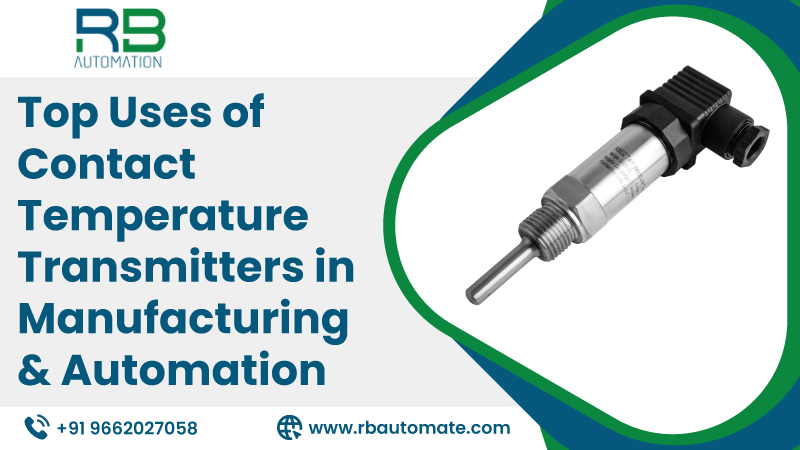
A contact temperature transmitter measures temperature by direct contact with a medium — a pipe, tank, surface, or probe inserted into a process. Unlike non-contact sensors that rely on radiation, contact devices capture heat transfer directly, giving stable, repeatable readings in most industrial settings.
A reliable temperature transmitter converts a sensor signal (for example RTD or thermocouple) into an industry-standard output like 4–20 mA or digital communication (HART, Modbus, Foundation Fieldbus). This conversion makes temperature data actionable for PLCs, DCS, and SCADA systems, enabling closed-loop control, alarms, and logging.
Key industrial uses and applications
Process control in chemical and petrochemical plants
Chemical reactions often depend on maintaining narrow temperature windows. A well-selected contact temperature transmitter placed in reactors, heat exchangers, or jacketed vessels provides precise feedback to heaters and coolers. This ensures consistent reaction kinetics, improves yield, and reduces the risk of runaway reactions.
Food and beverage processing
Food safety regulations require strict temperature documentation, from pasteurization to storage. Integrating temperature transmitter devices into conveyor ovens, pasteurizers, and refrigerated storage gives operators real-time visibility and automated control to meet compliance and product quality standards.
Pharmaceutical manufacturing
Pharmaceutical processes demand high accuracy and traceability. Contact temperature transmitter instruments linked to environmental control and batch record systems enable the tight control needed for crystallization, fermentation, and sterile processing.
HVAC and building automation
Large facilities and critical environments (clean rooms, data centers) rely on robust temperature transmitter readings to balance comfort, safety, and energy usage. Contact transmitters in ducting and plant equipment feed into building management systems for optimized control.
Metals and heat treatment
Heat treatment and metal processing require precise temperature profiles. A durable contact temperature transmitter that withstands high temperatures and harsh atmospheres helps maintain metallurgical properties and part consistency.
Power generation and utilities
Turbine inlet temperatures, boiler surfaces, and cooling loops all need continuous monitoring. Temperature transmitter installations protect equipment and support efficient power generation.
Plastics and polymer processing
Extrusion and molding depend on narrow temperature bands. Contact sensors and transmitters installed in barrel zones, molds, and chillers keep melt conditions stable, lowering scrap rates and improving cycle repeatability.
Oil & gas upstream and downstream
From wellhead temperature monitoring to refining units, contact temperature transmitter devices supply critical process data that supports safety systems and yield optimization.
How contact temperature transmitters integrate into automation systems
A temperature transmitter acts as the bridge between the raw sensor and the control network. It provides signal conditioning, linearization, and communication mapping so that PLCs and DCS can interpret temperature values reliably. Key integration points include:
- Converting RTD or thermocouple inputs to industry-standard outputs.
- Providing digital diagnostics and sensor health data.
- Allowing remote configuration and calibration via HART or fieldbus.
- Supporting multi-drop digital networks to reduce wiring and simplify maintenance.
When selecting a contact temperature transmitter, consider compatibility with existing control architecture, communication needs, and the robustness required for your process environment.
Choosing the right transmitter for the job — practical selection steps
- Define the process conditions: temperature range, pressure, vibration, and environment.
- Decide the sensor type: RTD for stability and accuracy, thermocouples for high temperature range.
- Match the output: analog 4–20 mA for simple loops, HART or Modbus for diagnostics.
- Specify protection and materials: weatherproof housings, corrosion-resistant probes, explosion-proof options where required.
- Plan calibration frequency and traceability based on quality standards.
Using this approach keeps the temperature transmitter performance aligned with operational goals and regulatory requirements.
Benefits of using contact temperature transmitters
Contact devices deliver:
- Direct measurement accuracy for liquids, solids, and gas-contacted surfaces.
- Fast response when probes are properly selected and installed.
- Better long-term stability in many industrial conditions.
- Compatibility with control systems for real-time automation.
These advantages translate into less downtime, improved product quality, and reduced waste across production lines.
Installation best practices for reliable performance
Correct mechanical mounting, thermal conduction, and sensor protection are vital. Use proper insertion depth for thermowells, minimize thermal gradients, and avoid electrical noise coupling. Pairing the transmitter with a well-chosen probe and protective fittings extends service life and preserves temperature transmitter accuracy.
Safety and compliance roles
In safety-instrumented systems, temperature data can drive interlocks and emergency shutdowns. Reliable temperature transmitter performance is therefore a matter of safety as well as quality. When processes interact with hazardous materials, select certified transmitters and follow applicable safety standards.
Top industries that benefit most
Manufacturing lines that adopt well-specified contact temperature transmitter systems report fewer defects, better energy consumption figures, and faster response to process deviations. Food processors achieve stronger HACCP compliance, pharmaceutical manufacturers reduce batch rework, and chemical plants see improved stability in critical reaction steps. The consistent theme is that accurate temperature data drives predictable results.
Practical steps to deploy transmitters across a plant
Start with critical control loops, install proper thermowells and transmitters, and verify readings with portable calibration devices. Expand to ancillary areas once gains are realized in critical zones. Document settings, responses, and maintenance activities so that teams can replicate success across lines.
Common pitfalls to avoid
- Using the wrong sensor type for the temperature range.
- Underspecifying transmitter protection for harsh environments.
- Ignoring wiring and grounding practices that introduce noise.
- Overlooking calibration intervals and record keeping.
Avoiding these mistakes helps preserve the performance advantages of the chosen temperature transmitter.
Why Choose Us
RBA OPTISYNC PRIVATE LIMITED brings deep expertise in temperature measurement and process automation with a customer-first approach. We focus on application-matched recommendations that align device selection, control integration, and maintenance strategy to your production goals.
Our team supports customers from initial specification through installation and calibration, and we maintain local resources to reduce response times. Choosing RBA OPTISYNC PRIVATE LIMITED means working with a partner who values clear communication, practical solutions, and long-term reliability for your temperature transmitter needs.
Conclusion
Contact temperature transmitters play a vital role in modern manufacturing and automation by providing accurate, reliable, and fast temperature readings that protect processes, improve product quality, and reduce downtime. Selecting the right device and working with a knowledgeable supplier maximizes return on investment and keeps operations safe. Regular calibration, correct installation, and compatibility with control systems are practical steps that extend instrument life and maintain measurement integrity. By adopting best practices and partnering with experienced professionals, manufacturers can turn temperature data into a decisive advantage for efficiency, compliance, and consistent product outcomes and accelerate innovation across production lines everywhere possible.
key takeaways
- Contact temperature transmitters provide accurate, stable, and repeatable readings, making them essential for process control in industries like chemical, food, pharmaceutical, HVAC, and power generation.
- These transmitters act as the critical link between sensors and automation systems, converting RTD/thermocouple inputs into reliable 4–20 mA or digital signals for PLCs, DCS, and SCADA platforms.
- Correct selection based on process conditions, sensor type, output signal, and material compatibility ensures long-term performance, safety, and regulatory compliance.
- Proper installation and calibration—including thermowell depth, noise-free wiring, and periodic validation—significantly improves accuracy, reduces downtime, and protects equipment.
- Working with experienced partners like RBA OPTISYNC PRIVATE LIMITED provides application-based guidance, technical support, and fast local assistance, helping plants achieve consistent temperature control and operational efficiency.
For more information on Contact Temperature Transmitters, call us +91 96620 27058 or email inquiry@rbautomate.com for expert guidance and product selection.